
Our expertise

Bluevolta know-how
Bluevolta’s area of expertise covers ground-mounted solar power plants, carport and rootop installations, off-grid systems and hybrid power plants for remote sites and mini-grids.
Ground-mounted
power plant
You are?
- Developers
- Independent power producer
- Financing organizations
Services
- Feasibility study
- Technical due diligence
- Owner's engineering
- Project management
1.
Ground-mounted power plants
Ranging from a few MW to several hundred MW, ground-mounted power plants are still the main contributors in terms of installed capacity to the current and future strong growth of photovoltaics worldwide. Priority will be given to derelict land, industrial wasteland and roadside derelict areas, in order to make the most of areas that have already been developed.
In Europe, in particular, their development is increasingly regulated to avoid land-use conflicts, particularly with farmers.
Agrivoltaics aims to put photovoltaics at the service of agricultural production on the same plot of land. In France, the APER law of March 10, 2023 defines agrivoltaics. The decree of April 8, 2024 specifies the conditions for setting up agrivoltaic and ground-mounted photovoltaic projects on natural, agricultural and forested land.
Bluevolta has significant experience in ground-mounted power plant projects, assisting developers with project design and monitoring, as well as carrying out due-diligence and technical audits as part of buy-back or refinancing operations.
2.
Rooftop Carport
Installing photovoltaic systems on roofs is the first thing to do, as it allows you to make the most of an existing surface that would otherwise be unused. Numerous aspects need to be checked to validate feasibility, starting with the structure of the building, the type and age of the roofing, the available surface area, and the potential shading of technical equipment or other buildings in the vicinity. Any additional requirements should be discussed in advance with the site insurer.
Parking lots also represent very interesting surfaces, as they are already artificialized. The installation of shading systems makes it possible to make the most of parking areas while improving user comfort and generating electricity. It is advisable to include astrategy for thedevelopment of charging stations for electric vehicles right from the design stage. This will make it possible to combine the 2 components (shading and bollards) during the construction phase, to optimize the overall cost of the operation.
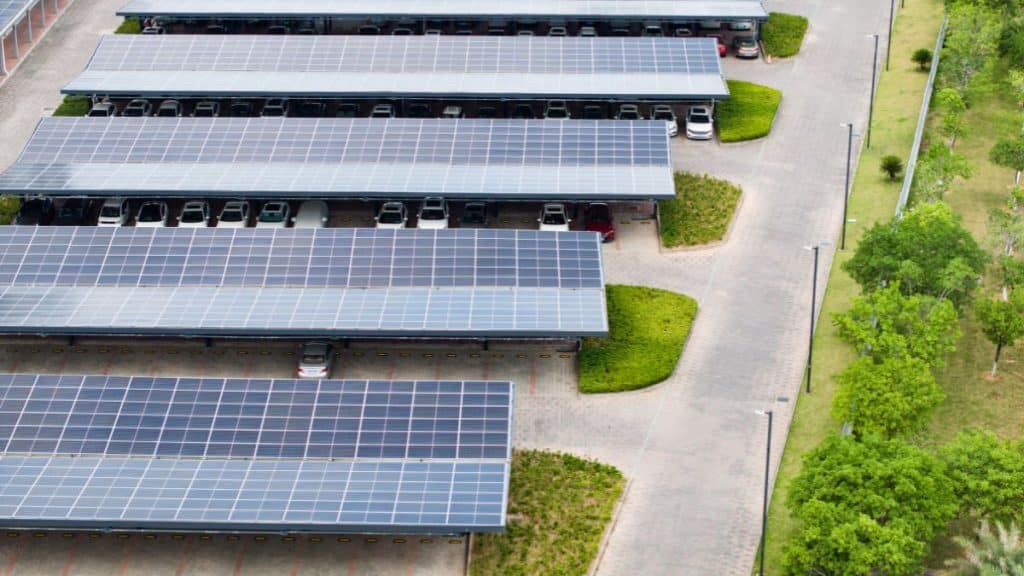
At least 4 good reasons to choose photovoltaics for your site:
- Visibility and control of long-term electricity costs for the self-consumption share
- Enhancing the value of existing land
- Compliance with current and future regulations (solarization obligation, tertiary sector decree, climate and resilience law)
- Thanks to PV shading: improved user comfort and associated services (charging stations for electric vehicles)
Rooftop Carport
You are?
- Public authority
- Company
- Industrial
- Installer / EPC
Services
- Feasibility study
- Owner's engineering
- Project management
- Training
Hybrid off-grid systems
You are?
- Developers
- Hybrid/off-grid power plant operators
- International financial institutions
- Development organizations
- Electrification agencies
Services
- Feasibility study
- Consulting
- Training
- Owner's engineering
3.
Hybrid off-Grid systems
Among the Sustainable Development Goals defined by the United Nations in 2015, Goal 7 is to guarantee access to clean, affordable energy for all. In 2021, 675 million people still had no access to electricity. Most of these populations live in rural and peri-urban areas of developing countries, particularly on the African continent.
Photovoltaics has always been rightly presented as the most appropriate technology for decentralized electricity generation in areas not served by national grids. Thanks to the significant drop in costs in recent years, this technology is now accessible and must now be deployed en masse to tackle the major challenge of access to electricity for all.
The creation of mini-grids powered by a PV+battery plant (hybridized or not with generators) is a suitable solution for towns, districts or villages. In particular, this solution makes it possible to develop energy services, including for productive purposes, enabling the economic development of the areas concerned.
Sizing hybrid power plants requires special skills to define scenarios that optimize the discounted cost of electricity, taking into account all economic, socio-cultural, technical and regulatory criteria. These may be greenfield projects (electrification of a new area) or the hybridization of existing mini-grids powered by thermal generators (diesel or gas).
Implementing such projects not only requires specific technical expertise, but also the need to consider the project as a whole right from the design phase, to ensure its long-term viability: how does the project fit into the current regulatory framework? What financial support mechanisms, if any? Roles and responsibilities of each stakeholder and transfer of skills to the future operator.
Bluevolta has experience of this type of project, which is often financed by international donors such as the World Bank, AFD and KfW.