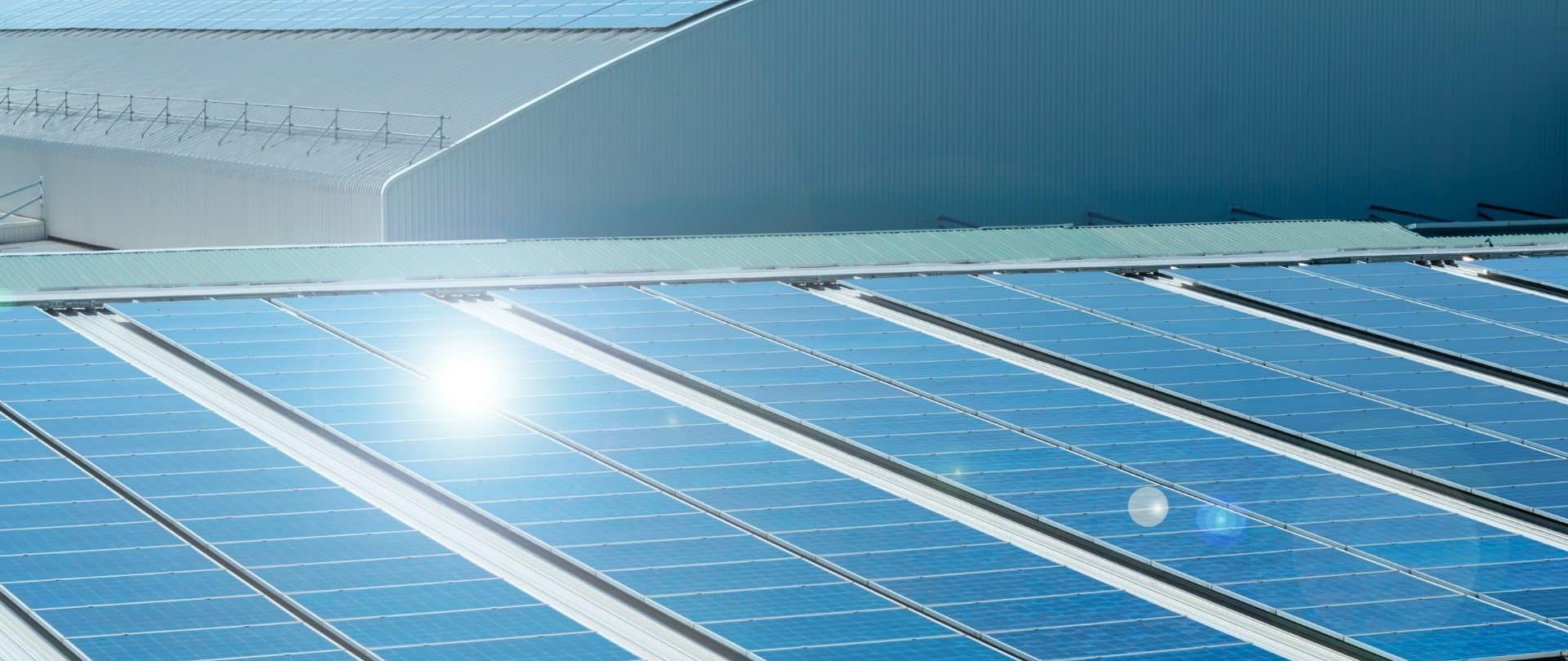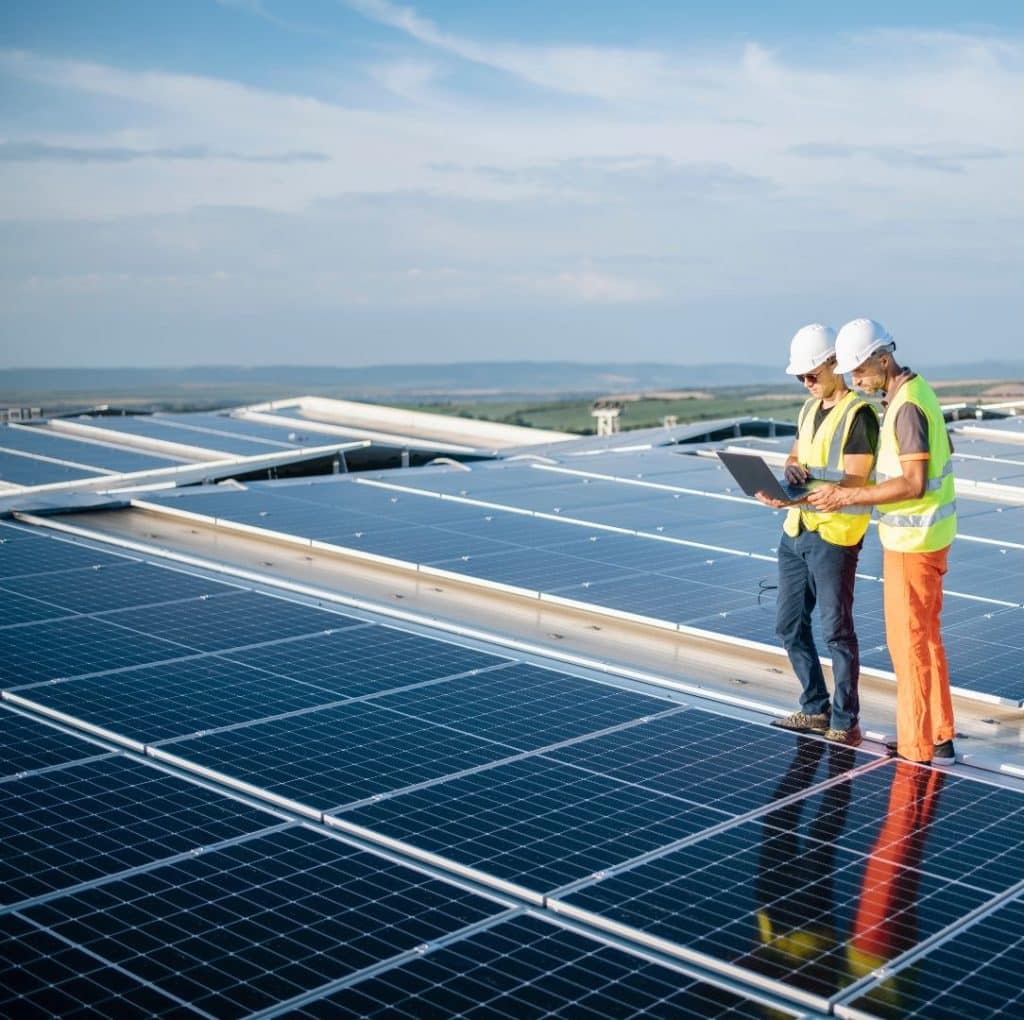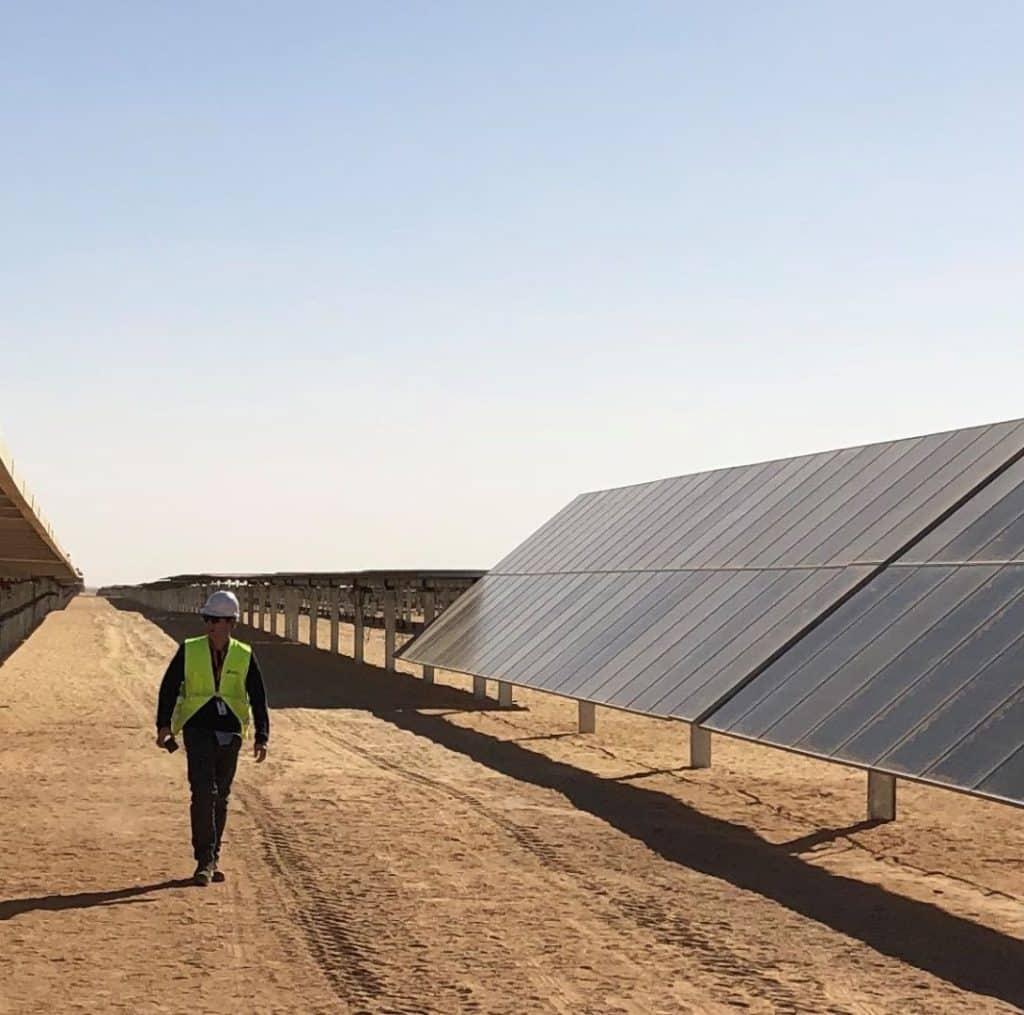

The following elements are analyzed based on existing documentation and data collected during the site visit: surrounding obstacles that may cause shading, available surface area, type of electrical installation and nearby networks, nature of the soil and topography for ground mounted and carport projects.
In the case of roof-mounted installations, additional considerations such as the age of the building and the type of roofing/structure are also taken into account.
A structural study shall be conducted also to confirm that the building can withstand the additional efforts associated with the solar system and to assess if any reinforcement work is required.
For self-consumption projects and off-grid isolated sites, it is absolutely essential to understand and estimate the electricity consumption profiles in order to size the photovoltaic array as accurately as possible.
To achieve this, it is necessary to rely on historical consumption data while anticipating future needs. For greenfield projects or isolated non-electrified sites, load curves are reconstituted on the basis of consumption forecasts.
The accuracy of load curves becomes even more important when adding a Battery Energy Storage System (BESS) and/or generators in the context of hybrid power plants for industrial sites or isolated mini-grids for rural electrification.
Several sources of meteorological data are available and evaluated in order to select the one with the lowest uncertainty for the site under consideration.
This is an important step, as the resource selected will have a major impact on the project’s yield and profitability.
Global Horizontal Irradiance (GHI) and ambient temperature are the most important data for simulations. Depending on the selected source, these historical time series data (satellite and ground measurement when available) are compiled and compressed into a typical year called TMY (Typical Meteorological Year) which will be used as input for the energy yield calculation.
Most of the time, the regulatory context of photovoltaic projects is constantly evolving. Depending on the project location and type, this task may be performed by local partners in the country where the project is located.
The administrative requirements such as permitting and access to the public grid will be described along with the estimated timelines.
The different options for the energy valorisation are also presented (feed-in tariff, corporate PPA, self-consumption, etc.).
Several design scenarios are modelled and simulated using reference softwares, such as PVSyst or Archelios Pro.


We attach the utmost importance to defining and justifying all technical assumptions and losses used during the modeling stage. With solar resources, these assumptions are essential for an accurate estimate of the energy yield.
Simulations are carried out on an hourly basis over an entire year in order to capture the different seasons and the hourly correlation between production and consumption (for self-consumption).
In this way, PV capacity can be adjusted according to available surface area and targeted self-consumption rate when applicable.
Following the uncertainty analysis, P90 and P99 values for the energy yield are calculated to be used as input for the financial model.

For hybrid power plants and mini-grids, the HOMER Pro software is used to model several generation sources (renewable or not) and to identify the scenario that will achieve the lowest Levelized Cost of Electricity (LCOE).
Once the most suitable technical scenario is selected, preliminary layouts are prepared as well as the electrical single-line diagram.
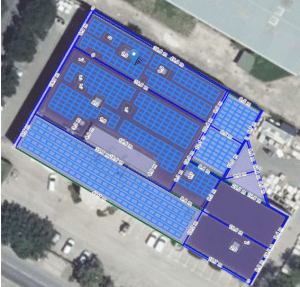
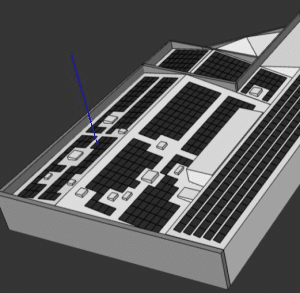
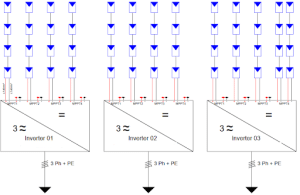
Key equipment is selected on the basis of a constant technology development monitoring in particular for photovoltaic modules, inverters and mounting structures
The investment (CAPEX) and operating (OPEX) costs are assessed thanks to our in-depth knowledge of the PV sector’s technologies and manufacturers.
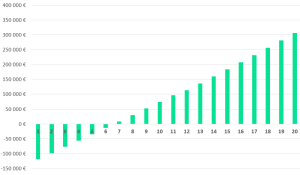
Depending on the approach considered for the valorisation of the produced electricity, an economic analysis is carried out to calculate the profitability indicators such as Net Present Value, Levelized Cost of Electricity (LCOE), Internal Rate of Return (IRR) and payback.
The various possible contracting approaches are presented (e.g. turnkey, lot wise) and assessed in the specific context of the project.
A provisional schedule is prepared up to provide the project owner with a clear visibility on the subsequent phases of execution.